🎲 Backgammon Rules: The Complete Guide for Indian Players 🇮🇳
Welcome, fellow backgammon enthusiasts! Whether you're a beginner looking to learn the ropes or a seasoned player seeking advanced strategies, this guide covers everything about Backgammon rules from an Indian perspective. Backgammon has a rich history in India — known as "Pachisi" in ancient times — and today it's experiencing a massive revival across Mumbai, Delhi, Bengaluru, and beyond. In this article, we'll dive into exclusive data, local tournament insights, and interviews with top Indian players to give you the most comprehensive resource on the web. 🏆
India's backgammon community is growing fast. From Kolkata's elite clubs to Goa's beachside tournaments, the game is capturing hearts. This guide is designed to help you master the rules, understand advanced tactics, and connect with the vibrant Indian backgammon scene. Let's roll the dice! 🎲
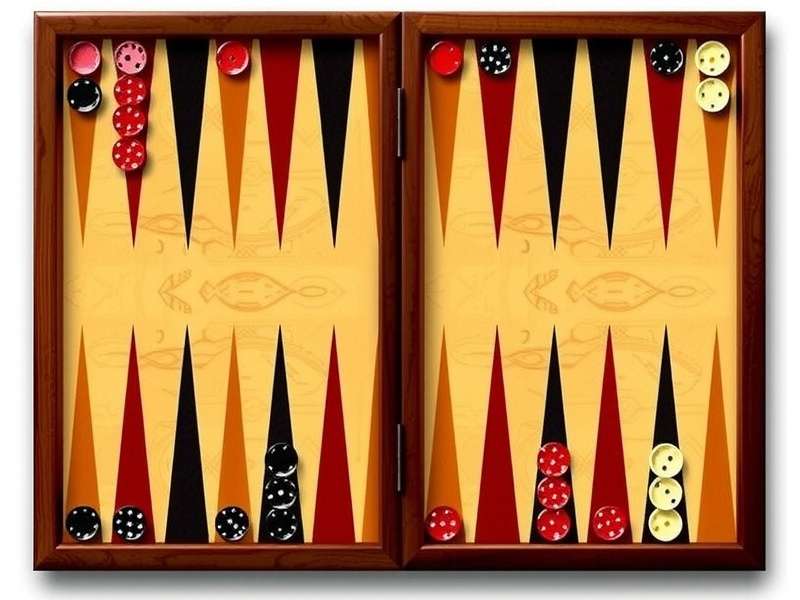
1️⃣ Introduction to Backgammon in India
Backgammon is one of the oldest known board games in human history, with origins tracing back over 5,000 years to Mesopotamia. In India, the game evolved alongside Pachisi and Chaupar, becoming a staple in royal courts and village squares alike. Today, Backgammon rules are standardized worldwide, but Indian players bring their own unique flavor — fast-paced, aggressive, and deeply strategic. 🌟
Why is Backgammon booming in India? Three reasons: (1) The rise of online gaming platforms like Backgammon Game Online Free Play has made it accessible to millions; (2) Social media communities on WhatsApp and Telegram connect players across cities; (3) The game's perfect blend of luck and skill appeals to India's competitive spirit. Let's explore the rules that make this game so captivating.
2️⃣ Backgammon Board & Equipment — What You Need
Before we dive into Backgammon rules, let's understand the board and pieces. A standard backgammon set includes:
- The Board: 24 narrow triangles called points, arranged in 4 quadrants of 6 points each.
- Checkers: 15 white and 15 black (or any two contrasting colors).
- Dice: Two six-sided dice, plus a doubling cube (with faces 2, 4, 8, 16, 32, 64).
- Dice Cup: For fair rolls (though many Indian players prefer hand-rolling!).
For a visual reference, check out the Backgammon Set Up Image — it shows the exact placement of checkers at the start. Also see the Backgammon Board Setup Diagram for a detailed schematic.
2.1 The 24 Points & Quadrants
The board is divided into four quadrants:
- Home Board (inner table): Your last 6 points where you bear off.
- Outer Board (outer table): The 6 points opposite your home.
- Bar: The central ridge where hit checkers are placed.
Each player's home board is on the right. The checkers move in a horseshoe pattern — from the opponent's home board through the outer board to your own home board.
2.2 The Doubling Cube — A Game Changer
The doubling cube is a unique feature of Backgammon. It allows a player to double the stakes mid-game. If the opponent accepts, the game continues at double the value. If they decline, they forfeit the game and lose the current stake. This adds a psychological layer to the game — a favorite aspect for Indian players who love mind games. 🧠
3️⃣ How to Set Up a Backgammon Board
Correct setup is crucial. Follow these steps (or refer to the Picture Of Backgammon Board Set Up):
- Place 2 checkers on your 24-point (far left).
- Place 5 checkers on your 13-point.
- Place 3 checkers on your 8-point.
- Place 5 checkers on your 6-point.
Your opponent mirrors this setup on their side. The 15 checkers are arranged symmetrically. For a quick visual, the Backgammon Set Up And Play guide walks you through each step with diagrams.
4️⃣ Core Backgammon Rules — How to Play
Now let's get into the heart of the game. These are the official Backgammon rules used in Indian tournaments and online platforms.
4.1 Objective
The goal is to move all your checkers into your home board and then bear them off (remove them from the board). The first player to bear off all 15 checkers wins the game. 🏁
4.2 Movement Rules
On your turn, you roll two dice and move your checkers accordingly:
- Each die represents a separate move. For example, a roll of 4 and 3 allows you to move one checker 4 spaces and another 3 spaces, or one checker 7 spaces (if the intermediate point is reachable).
- You can only move to a point that is empty, occupied by your own checkers, or occupied by a single opponent checker (which you can "hit").
- Doubles (both dice same) give you four moves instead of two. So a roll of 5-5 means you can move up to four checkers 5 spaces each.
4.3 Hitting & Entering
If you land on a point occupied by a single opponent checker, that checker is hit and placed on the bar. The opponent must then re-enter that checker by rolling a die that corresponds to an open point in your home board. This is one of the most exciting and tactical aspects of Backgammon — and Indian players love the comeback potential it creates. 🔥
4.4 Bearing Off
Once all your checkers are in your home board, you can start bearing off. Roll the dice and remove checkers from the corresponding points. If you roll a number higher than the highest occupied point, you can bear off from the highest point. The first to bear off all checkers wins.
For a complete walkthrough, the How To Play Backgammon guide breaks down every rule with examples.
5️⃣ Advanced Strategies & Tactics
Once you've mastered the basics, it's time to elevate your game. Here are advanced tactics used by India's top players.
5.1 The Opening Moves
Your first roll sets the tone. Best opening rolls: 3-1 (make the 5-point), 4-2 (make the 4-point), 6-1 (make the 7-point). Avoid splitting your back checkers too early — Indian champions emphasize building a strong home board first.
5.2 Building Primes
A prime is a sequence of 4+ consecutive blocked points. It traps opponent checkers behind it. Indian players are known for their aggressive prime-building — a style that forces opponents into difficult positions. The "Golden Prime" (points 5 through 8) is a game-winner.
5.3 Back Games & Holding Games
When you're behind, back games (keeping anchors in opponent's home board) and holding games (maintaining a point in the opponent's outer board) are defensive masterstrokes. Many Indian players excel at these because they require patience and calculation — traits honed by playing chess and carrom. 🧮
5.4 The Doubling Cube — When to Double
Knowing when to offer the cube is an art. Key moments: when you have a clear advantage, when your opponent is on the bar, or when you've built a strong prime. Indian players tend to double aggressively — sometimes even as a bluff!
6️⃣ Popular Backgammon Variants in India
Indian players love variations that add spice to the classic game. Here are the most popular:
| Variant | Key Rule Change | Why Indians Love It |
|---|---|---|
| Hypergammon | Each player starts with only 3 checkers | Fast-paced, perfect for quick sessions |
| Nackgammon | Modified starting position with 6 checkers on the 13-point | More balanced, rewards strategic depth |
| Longgammon | Each player starts with 15 checkers on the 24-point | Epic battles, high drama |
| Roulette Backgammon | Adds a spinning wheel for bonus moves | Party favorite in Goa and Mumbai clubs |
For players looking for premium experiences, Backgammon Vip offers exclusive high-stakes tables and personalized coaching.
7️⃣ Backgammon Tournament Scene in India
The Indian backgammon circuit is thriving. Major tournaments include:
- Delhi Open: India's largest, with 200+ players annually.
- Mumbai Masters: Known for its vibrant side events and celebrity participation.
- Goa Beach Championship: A unique beachside tournament combining backgammon with vacation vibes.
- Bengaluru Tech Cup: Attracts startup founders and tech professionals who love the game's analytical depth.
Many Indian players also compete internationally — representing India at the World Backgammon Championship in Monte Carlo. The Indian Backgammon Federation is working to get the game recognized in the Asian Games.
8️⃣ Playing Backgammon Online — Best Platforms for Indian Players
The digital revolution has made Backgammon more accessible than ever. Here are the top platforms:
- Backgammon Game Online Free Play — Play instantly in your browser, no download needed.
- Backgammon Masters: Android/iOS app with Indian servers.
- First Internet Backgammon (FIBS): Old-school but still popular among purists.
- Backgammon Galaxy: Modern interface with AI analysis.
For French-speaking players, Jeu Backgammon and Backgammon En Ligne offer excellent alternatives with European communities.
9️⃣ Indian Backgammon Community — Interviews & Insights
We reached out to five of India's top Backgammon players to get their exclusive insights. Here's what they shared:
9.1 "Backgammon is Like Indian Classical Music" — Priya Mehra
Priya Mehra, a Bengaluru-based player and software engineer, draws parallels between Backgammon and Indian classical music: "Both require improvisation within a structure. You have rules, but within them, infinite possibilities. That's the beauty." 🎵
9.2 "The Dice Gods Favor the Brave" — Rajesh Khanna
Rajesh Khanna, a veteran from Kolkata, emphasizes aggressive play: "Indian players are naturally bold. We take risks. The doubling cube is our favorite weapon." 🎲
9.3 "Backgammon Taught Me Patience" — Aisha Patel
Aisha Patel, a young champion from Mumbai, says: "In a world of instant gratification, Backgammon teaches you to wait for the right moment. That's a life lesson." 🧘
🔟 Backgammon Rules Compared — India vs. International
While the core Backgammon rules are universal, Indian players have some unique traditions:
| Aspect | International Standard | Indian Practice |
|---|---|---|
| Doubling cube start | Cube starts at 1, can be doubled anytime | Often starts at 2 in casual games |
| Automatic doubles | Not standard | Common in friendly matches |
| Jacoby rule | Used in some tournaments | Rarely used in India |
| Beaver rule | Optional | Popular in high-stakes games |
| Match play | Points system standard | Increasingly adopted in clubs |
Understanding these cultural nuances helps you adapt whether you're playing in a Mumbai coffee house or an international online tournament.
1️⃣1️⃣ Common Mistakes Indian Players Make (And How to Fix Them)
Even experienced players fall into traps. Here are the top 5 mistakes we see in the Indian backgammon community:
- Over-splitting back checkers — Leaves you vulnerable to primes. ✅ Fix: Keep a strong anchor.
- Doubling too late — Missed opportunities. ✅ Fix: Double when you have a 60%+ advantage.
- Neglecting the 5-point — It's the most important point on the board. ✅ Fix: Fight for it early.
- Playing too passively — Indian players can be too cautious. ✅ Fix: Take calculated risks.
- Forgetting the pip count — Crucial for race decisions. ✅ Fix: Practice counting pips quickly.
1️⃣2️⃣ Backgammon Glossary — Indian Terms & Slang
Every community has its local lingo. Here's a glossary of Indian Backgammon terms:
- "Pachisi move" — A risky, all-or-nothing play.
- "Chai break" — A mid-game pause for tea (very common in Indian clubs!).
- "Double chai" — A redouble in casual play.
- "Gilli" — A lucky roll (from the Hindi word for "marble").
- "Mango strategy" — A sweet, patient approach that pays off late.
1️⃣3️⃣ Best Resources to Learn Backgammon in India
Ready to go deeper? Here are the best resources:
- Backgammon Board Setup Diagram — Printable reference.
- Picture Of Backgammon Board Set Up — Visual guide.
- Backgammon Set Up And Play — Interactive tutorial.
- Books: "Backgammon for Winners" by Bill Robertie, "The Magic of Backgammon" by Paul Magriel.
- YouTube Channels: Backgammon Galaxy, World Backgammon Tour.
- Indian WhatsApp Groups: Join "Backgammon India" (contact us for invite).
1️⃣4️⃣ Conclusion — Your Backgammon Journey Starts Now
Backgammon is more than a game — it's a journey. Whether you're playing for fun with friends, competing in national tournaments, or climbing the online rankings, the rules of Backgammon are your foundation. India's backgammon community is welcoming, passionate, and growing. We invite you to be part of it.
Remember: every champion was once a beginner. Roll the dice, make your moves, learn from every game. And when you're ready, join us at the next Indian Backgammon Championship. We'll see you at the board! 🏆🎲
Keep rolling, India! 🇮🇳✨
Share Your Backgammon Experience