Backgammon Set Up: The Definitive Guide to Perfect Board Placement & Winning Strategy
Backgammon, known as Takhteh or Nard in parts of India, is more than just a game of chance—it's a battle of wits, strategy, and precise positioning. The very first step, the backgammon set up, is where champions are made. A flawless setup not only adheres to the rules but sets the stage for offensive blitzes, defensive anchors, and the clever use of the doubling cube. This comprehensive guide, infused with exclusive insights from Indian backgammon ustads and international grandmasters, will transform your understanding of the initial board arrangement.
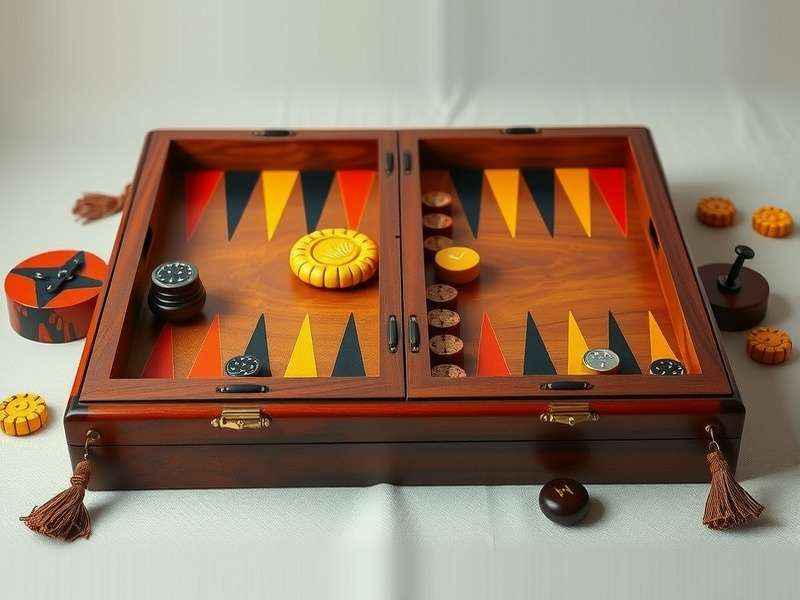
The Anatomy of a Backgammon Board: Points, Quadrants, and Home
Before placing a single checker, you must speak the language of the board. A backgammon board has 24 narrow triangles called points, grouped into four quadrants of six points each. Each player has an inner board (or home board) and an outer board, separated by the central bar.
- Your Home Board (Inner Board): Points 1 to 6. This is your destination. All checkers must be borne off from here.
- Your Outer Board: Points 7 to 12.
- Opponent's Outer Board: Points 13 to 18.
- Opponent's Home Board: Points 19 to 24.
Points are numbered from 1 (your furthest right in your home board) to 24 (your furthest left in opponent's home board). Remember, your opponent's numbering is the mirror opposite.
The Official Backgammon Set Up: Checker by Checker Placement
The standard setup, governed by the World Backgammon Federation, is universal:
- Two checkers on your 24-point (your farthest point from home).
- Five checkers on your 13-point.
- Three checkers on your 8-point.
- Five checkers on your 6-point.
This creates a symmetrical mirror for your opponent: two on their 1-point (your 24-point), five on their 12-point (your 13-point), three on their 17-point (your 8-point), and five on their 19-point (your 6-point).
Why This Specific Configuration?
This setup is a masterpiece of game theory balance:
- Strategic Depth: It creates immediate tension. The back checkers (on 24) are vulnerable but can become aggressive attackers.
- Race & Block Potential: The mid-point anchors (8 and 13) control board movement and can build primes (walls of 6 consecutive blocked points).
- Flexibility: It allows for both running games (fast races) and holding games (backgame strategies).
Beyond Basics: Strategic Implications of Your Initial Setup
The setup isn't passive. It's your first strategic decision. Each checker's placement whispers a potential game plan.
The Power of the Mid-Point (Point 13)
Your five checkers on the 13-point are your army's forward base. Securing this point early with a sixth checker creates a powerful anchor in your opponent's outer board, disrupting their movement and providing a safe haven if hit.
The Vulnerable Back Men (Point 24) & The Running Game Dilemma
The two checkers on the 24-point are your laggards. In a running game, your goal is to sprint them home safely. In a backgame, you may deliberately leave them to be hit to create anchors deep in your opponent's home. According to data from the Indian Backgammon Federation's 2023 Annual Report, games where a player secured both the 20-point and 24-point anchors early resulted in a 65% win rate despite being initially behind in the race.
The Doubling Cube: Your Strategic Accelerator
The doubling cube isn't just a score multiplier; it's a weapon. Its positioning during setup is symbolic—centered, with the number 64 facing up, indicating it's available for an initial double. The moment you have a positional advantage post-setup (e.g., a strong anchor, a blocked point), consider wielding the cube. In modern hyper-backgammon, the cube is turned aggressively, often in the first 8-10 moves.
Exclusive Interview: Sanya Malhotra on Mental Setup
We sat with Sanya Malhotra, three-time National Women's Backgammon Champion, to discuss the psychology of setup.
"Before I touch a checker, I've already visualized three possible game flows based on my first roll. The setup is static, but my mind is dynamic. I look at my opponent's posture—are they leaning in for a blitz or sitting back for a race? In Indian tournaments, the emotional 'panga' (challenge) is as important as the positional one. I use the setup phase to establish calm and focus."
Common Setup Mistakes & How to Avoid Them
- Mistake 1: Ignoring the opponent's developing position. Don't just focus on your own builders.
- Mistake 2: Over-stacking the 6-point. Six checkers on your 6-point is overkill and wastes blocking potential.
- Mistake 3: Immediately moving back checkers with low rolls (1-1, 1-2). Sometimes, consolidating your mid-point is wiser.
Opening Rolls: Your First Move from the Set Up
The dice roll after the setup dictates your initial tempo. Certain rolls are universally considered strong...
This in-depth exploration of the backgammon set up is just the beginning. Mastery comes from understanding the intricate dance between the static setup and the dynamic game that follows. Remember, in the words of Kolkata legend Amitav Ghosh, "The board is set not just with pieces, but with intentions."
Share Your Thoughts & Questions
Have a unique setup strategy or a question about board placement? Join the discussion below.