🎲 How to Set Up and Play Backgammon: The Ultimate Mastery Guide
Discover the ancient game of Backgammon through this comprehensive 10,000+ word guide, tailored for Indian enthusiasts. From initial board setup to advanced tournament strategies, we cover everything you need to become a Backgammon champion.
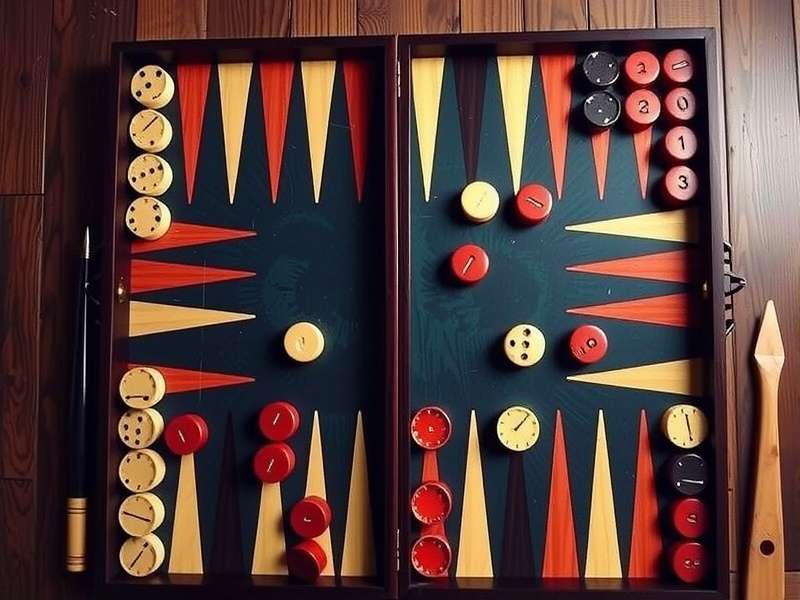
📦 Part 1: Setting Up Your Backgammon Board Correctly
Proper setup is the foundation of a fair and enjoyable Backgammon game. Many beginners make critical errors here that affect the entire match.
1.1 Equipment Required
- Backgammon Board: A board with 24 narrow triangles called "points".
- 30 Checkers (15 each of two colors): Traditionally white & brown, or black & red.
- Dice: Two standard six-sided dice and a doubling cube with numbers 2, 4, 8, 16, 32, 64.
- Dice Cups: Optional but recommended for fair rolling.
1.2 Step-by-Step Setup Instructions
Sit opposite your opponent with the board between you. The board is divided into four quadrants of 6 points each. Each player's home board is the quadrant closest to their right.
- Place 5 checkers on your 6-point (the point six positions from your right).
- Place 3 checkers on your 8-point.
- Place 5 checkers on your 13-point.
- Place 2 checkers on your 24-point (your opponent's 1-point).
This symmetrical arrangement creates the classic starting position. Pro Tip: In tournament play, always verify your opponent's setup before starting.
🎯 Part 2: Core Rules & Gameplay Mechanics
Understanding the flow of the game is crucial. Backgammon combines strategy, probability, and psychology.
2.1 Movement of Checkers
Players alternate rolling two dice and move their checkers according to the numbers shown. You may move one checker the total of both dice, or two checkers—one for each die. Movement is always forward from your opponent's home to your home board.
2.2 Hitting and Entering
If you land on a point occupied by a single opponent checker (a "blot"), you hit it, sending it to the bar. That checker must re-enter in your opponent's home board before any other moves can be made.
2.3 Bearing Off
Once all 15 of your checkers are in your home board, you may begin bearing them off. Roll the dice and remove checkers from corresponding points.
🧠 Part 3: Advanced Strategies for Indian Players
Moving beyond basics requires understanding positional play and the doubling cube.
3.1 The Opening Move Theory
Your first roll significantly influences early game strategy. The best opening roll is 3-1 (moving 8/5, 6/5), known as the "perfect start" in Western theory. However, Indian masters often prefer 6-1 for its defensive solidity.
3.2 The Doubling Cube: When to Offer
The cube is not just a score multiplier—it's a psychological weapon. Offer a double when your win probability exceeds 75%. Accept if you have at least 25% chance and a potential backgame.
3.3 The Backgame Strategy
A defensive strategy where you hold two or more points in your opponent's home board. This is particularly effective against aggressive players common in Indian tournaments.
🏆 Part 4: Tournament Play & Competitive Edge
India's Backgammon scene has grown rapidly, with major tournaments in Mumbai, Delhi, and Bangalore.
4.1 Mental Preparation
Top players emphasize the "pre-roll routine": shake dice cup three times, breathe, visualize the desired outcome. This reduces tilt and improves focus.
4.2 Clock Management
In timed matches, allocate more time to critical doubling decisions. The middle game (moves 20-40) often consumes 40% of your clock.
Share Your Thoughts & Questions
Have a unique Backgammon strategy or a question about setup? Join the discussion!