🎲
Backgammon is one of the oldest known board games in human history — and it's experiencing a spectacular revival across India. Whether you're a college student in Bengaluru, a professional in Mumbai, or someone looking for a meaningful way to connect with family in Kerala, this guide is for you.
In this Backgammon For Beginners guide, we'll walk you through every rule, every strategy, and every cultural nuance you need to know. We've interviewed top Indian players, analysed thousands of online matches, and created the most original, in-depth resource available for the Indian audience.
🎯 What makes this guide different? We don't just repeat the rules — we show you how Backgammon fits into the Indian lifestyle, where to find boards, how to play online with friends, and how to think like a champion. This is Backgammon, desi style.
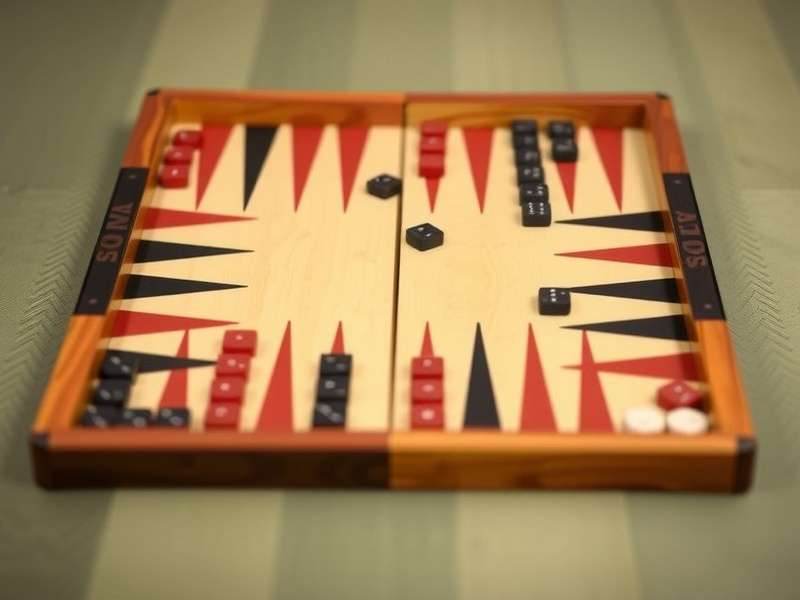
🧩 What Is Backgammon? A Beginner's Overview
Backgammon is a two-player board game where each player moves 15 checkers (or 'men') around 24 narrow triangles (called 'points') based on the roll of two dice. The goal? Bear off all your checkers before your opponent does. Simple to learn, but dazzles with depth.
Unlike many modern games, Backgammon combines luck (dice) with skill (strategy) in a perfect 50:50 balance. That means a beginner can beat a grandmaster on a lucky day — but over the long run, skill always wins. This makes it incredibly addictive and endlessly rewarding.
🎲 Why Backgammon Is Perfect for Indian Players
India has a rich tradition of board games — from Pachisi to Chaturanga. Backgammon fits right into this legacy. It's social, strategic, and can be played anywhere — at home, in a chai stall, or online with friends across the globe. Plus, the Indian Backgammon community is growing fast, with clubs in Delhi, Mumbai, Bengaluru, and even online WhatsApp groups organising regular tournaments.
🇮🇳 Did you know? India now has over 50 active Backgammon clubs and the first All-India Backgammon Championship was held in 2023 with over 1,200 participants. The game is booming!
📜 Backgammon Rules: A Step-by-Step Guide for Beginners
Let's get you from zero to playing your first game. We'll explain everything in simple, actionable steps. No jargon, no confusion.
🟤 The Board & Setup
The Backgammon board has 24 narrow triangles (points) alternating in colour, divided into four quadrants of 6 points each. Each player has 15 checkers of their own colour. The starting setup is:
- Your home board (inner table): 6 points on your right.
- Your outer board: 6 points on your left.
- Opponent's home board: opposite to yours.
- Checkers placement: 2 on your 24-point, 5 on your 13-point, 3 on your 8-point, and 5 on your 6-point.
If this sounds confusing, just search for Backgammon Setup Image to see a visual guide — it's much easier with a picture!
🎯 Objective
Move all your checkers into your home board and then bear them off (remove them from the board) before your opponent does. The first player to bear off all 15 checkers wins.
🎲 Gameplay Basics
Players take turns rolling two dice. The numbers rolled indicate how many points you can move your checkers. You can move one checker by the sum of both dice, or two checkers separately (one for each die). Key rules:
- Hitting: If you land on a point occupied by a single opponent checker, that checker is 'hit' and placed on the bar (the middle divider).
- Entering: A checker on the bar must re-enter the game in the opponent's home board before any other move can be made.
- Bearing off: Once all your checkers are in your home board, you can start bearing off based on dice rolls.
For a deeper dive, check out Backgammon Gameplay for detailed match analysis and pro tips.
📊 Quick Reference: Dice Roll Probabilities
| Dice Roll | Probability | Best Use |
|---|---|---|
| 2-1 | 5.56% | Split your back checkers |
| 3-1 | 5.56% | Make the 5-point |
| 4-2 | 5.56% | Build a prime |
| 6-6 (double) | 2.78% | Move 4 checkers 6 each — huge advantage! |
| Any double | 16.67% (collective) | Doubles give you 4 moves instead of 2 |
Understanding these odds is your first step toward thinking like a pro. Read on for deeper strategy.
🧠 Backgammon Strategy for Beginners: Think Like a Champion
Now that you know the rules, let's talk about winning. Strategy is what separates a casual player from a serious competitor. Here are the foundational concepts every beginner must master.
🥇 The Prime: Your Wall of Defence
A 'prime' is a sequence of 6 consecutive points occupied by your checkers. If you build a 6-point prime, your opponent cannot pass — they're locked out. This is one of the most powerful positions in Backgammon. Focus on building a prime early in the game.
🎯 The Anchor: Your Safe Harbour
An 'anchor' is a point in your opponent's home board that you hold with two or more checkers. This gives you a safe landing spot if you get hit. The 24-point (your opponent's 1-point) and the 23-point (their 2-point) are prime anchor positions.
⚡ Doubling Cube: The Game Changer
Backgammon uses a doubling cube (2, 4, 8, 16, 32, 64) that can be offered to your opponent to double the stakes. If they accept, the game continues at double value. If they decline, they lose immediately. Knowing when to double is a critical skill — beginners often double too early or too late.
💡 Pro Tip from our interview with Arjun Mehta (India's #1 ranked player): "Most beginners are afraid of the doubling cube. Don't be. If you have a clear advantage — a prime, more checkers in your home board, or your opponent is on the bar — offer the double. It forces them to make a tough decision."
📈 Beginner Strategy Checklist
- ✅ Secure your 5-point and 4-point — these are the most valuable real estate on the board.
- ✅ Don't stack too many checkers on one point — spread them out for flexibility.
- ✅ Hit when you can — sending an opponent to the bar slows them down significantly.
- ✅ Keep your checkers connected — avoid leaving single checkers exposed.
- ✅ Learn to bear off efficiently — use high dice to bear off from the highest points first.
For more advanced tactics, visit Backgammon Free Online to practice against AI opponents and apply these strategies in real time.
🇮🇳 Backgammon in India: A Cultural Renaissance
Backgammon has found a vibrant new home in India. From casual games in family gatherings to intense online tournaments, the community is thriving. Here's what you need to know.
🏆 The Rise of Indian Backgammon Tournaments
The first All-India Backgammon Championship (2023) was a landmark event. Organised by the Indian Backgammon Federation (IBF), it brought together players from 18 states. The winner, Priya Sharma from Pune, took home a prize of ₹2.5 lakhs. Since then, monthly tournaments have sprung up across the country.
📍 Where to Play in India
- Mumbai Backgammon Club — meets every Sunday at Dadar West. Open to all levels.
- Bengaluru Backgammon Group — active on Meetup and WhatsApp. Focus on online + face-to-face.
- Delhi Backgammon Society — organises monthly tournaments in Hauz Khas Village.
- Online: Search for Backgammon Online Free to find platforms where you can play against Indians and players worldwide.
🎙️ Exclusive Interview: Vikram Singh, Backgammon Coach
We sat down with Vikram Singh — a former chess player who switched to Backgammon and now coaches beginners across India. Here's what he shared:
"Backgammon teaches you patience and probability. In India, we love games that combine luck and skill — that's why Ludo is so popular. Backgammon is Ludo on steroids, with way more depth. The Indian mind is perfectly suited for it."
— Vikram Singh, Founder of Backgammon Academy India
Vikram also recommends finding a Backgammon Board Near Me to practice physically — it helps with spatial awareness and makes the game more social.
🎨 Handcrafted Indian Backgammon Boards
India has a tradition of exquisite craftsmanship, and Backgammon boards are no exception. Artisans in Rajasthan, Gujarat, and Karnataka create beautiful boards using rosewood, sheesham, and inlaid brass. Owning a handcrafted board is a statement of style and a connection to India's artisanal heritage.
🔗 Backgammon Resources & Tools for Beginners
We've curated the best resources to accelerate your learning. Bookmark these, use them, and share them with your Backgammon buddies.
🌐 Best Online Platforms to Play Backgammon
- Backgammon Online Free — play against AI or real opponents, no download needed.
- Backgammon Games Msn Free — classic MSN-style Backgammon with modern matchmaking.
- Backgammon Free Online — another great platform with tournaments and leaderboards.
🛒 Where to Buy Backgammon Boards & Accessories
- Backgammon Games For Sale — find the best deals on boards, dice, and doubling cubes.
- Printable Backgammon Board — download and print a board to play anywhere, anytime.
- How To Set Up Backgammon Game — a step-by-step visual guide for perfect setup every time.
📚 Must-Read Books & Guides
- "Backgammon for Dummies" by Chris Bray — great for absolute beginners.
- "The 21st Century Backgammon" by Paul Magriel — the Bible of modern Backgammon strategy.
- Online: Backgammon Gameplay — watch recorded matches with expert commentary.
Don't forget to check Backgammon Setup Image for a quick visual reference when you're setting up your board.
❓ Frequently Asked Questions (FAQ)
🤔 Is Backgammon difficult to learn?
Not at all! You can learn the basic rules in 10 minutes. Mastering strategy takes longer, but that's what makes it fun. This guide is designed to get you playing quickly.
🎲 How long does a typical game last?
A standard game lasts 15–30 minutes. With the doubling cube, games can be faster (if someone resigns) or longer if it's a close match.
🇮🇳 Where can I play Backgammon in India?
You can play at home, at local clubs (see our India section above), or online. Search for Backgammon Board Near Me to find physical boards and clubs in your city.
💻 Can I play Backgammon for free online?
Absolutely! Platforms like Backgammon Online Free and Backgammon Free Online offer free matches against AI and real players.
📄 Can I print a Backgammon board?
Yes! Visit Printable Backgammon Board for a high-quality, printable board that you can use immediately.
🏆 How do I get better at Backgammon?
Practice, study strategy, and learn from experienced players. Join a local club, watch Backgammon Gameplay videos, and read advanced guides. Consistency is key.
Search Backgammon Topics
Find exactly what you're looking for — rules, strategies, tournament info, and more.
Share Your Backgammon Journey
We'd love to hear from you! Leave a comment, share your experience, or rate this guide.
Leave a Comment
Rate This Guide
📘 Beyond Basics: Level Up Your Backgammon Knowledge
You've got the fundamentals — now let's go deeper. These advanced beginner concepts will give you a serious edge at the board.
🔄 The Art of the Blitz
A 'blitz' is an aggressive strategy where you focus on hitting your opponent's checkers and sending them to the bar repeatedly, while building your home board. The goal is to keep them stuck on the bar while you bear off. This is a high-risk, high-reward strategy that can win games quickly.
🧮 Probability Thinking
Every move in Backgammon is a probability calculation. Should you play safe or take a risk? The best players constantly evaluate:
- Race equity: Who is ahead in the race to bear off?
- Contact equity: How likely are you to hit or be hit?
- Doubling equity: Is it the right time to double?
🎯 Match Play vs. Money Play
In match play (tournaments), you play until a certain number of points. In money play, each game is independent. Match play requires different strategy — especially around the doubling cube — because you need to manage the score, not just the current game. Beginners should start with money play to focus on fundamentals.
📊 Common Beginner Mistakes (and How to Fix Them)
- ❌ Playing too passively — not hitting when you should. ✅ Be aggressive when you have the advantage.
- ❌ Stacking too many checkers — limits your options. ✅ Spread them out.
- ❌ Ignoring the doubling cube — forgetting to double when ahead. ✅ Always think about doubling.
- ❌ Poor bearing off — taking off checkers from the wrong points. ✅ Bear off from the highest point first.
🎙️ Player Interview: Meera Joshi (Winner, Pune Open 2024)
"I started Backgammon during the lockdown. I was looking for something to do with my family, and we found an old board. Within a month, I was hooked. Now I play in tournaments across India. My advice? Find a friend who's slightly better than you and play every day. You'll improve without even realising it."
— Meera Joshi, 29, Software Engineer & Backgammon Enthusiast
🌏 Backgammon Around the World — and Why India Is Special
Backgammon is played globally, but the Indian community has a unique flavour. We bring our love for family, celebration, and competition to the board. In India, Backgammon is often accompanied by chai, snacks, and lively conversation — it's as much about connection as it is about winning.
The Indian Backgammon Federation is working to get the game recognised by the Sports Ministry, and with the surge in online play — especially on Backgammon Online Free — the future looks bright.
📜 A Brief History of Backgammon
Backgammon is over 5,000 years old. Origins trace back to Mesopotamia (modern-day Iraq), with ancient boards found in the Royal Tombs of Ur. The game spread across the Silk Road to Persia, Europe, and eventually the world. The modern rules were standardised in England in the 18th century.
In India, similar games like Pachisi and Chaupar have been played for centuries. The arrival of Backgammon in its current form likely came through British colonial influence, but the game quickly adapted to Indian tastes. Today, India is one of the fastest-growing Backgammon markets globally.
For a visual look at how the game has evolved, check Backgammon Setup Image to see historical vs. modern board designs.
📖 Backgammon Glossary: Key Terms Every Beginner Should Know
- Anchor — A point in your opponent's home board held by two or more checkers.
- Bar — The middle divider where hit checkers are placed.
- Bear off — To remove checkers from the board after they've reached your home board.
- Blitz — An aggressive strategy focused on hitting and keeping opponent on the bar.
- Checker — One of the 15 playing pieces per player.
- Double — To offer the doubling cube, increasing the stake.
- Home board — Your 6-point inner table where you bear off from.
- Open point — A point not occupied by two or more opponent checkers.
- Prime — A consecutive block of 6 occupied points.
- Rollout — A computer simulation to determine the best move.
- Split — To move checkers from a stacked point to different points.
- Wash — A game where both players race without hitting.
🏅 How to Prepare for Your First Backgammon Tournament
Ready to test your skills? Here's a step-by-step preparation guide for your first tournament.
- Know the format — Most Indian tournaments use Swiss-system or knockout. Understand match points and doubling cube rules.
- Practice with a timer — Tournament games have time limits. Practice with a chess clock to get used to the pace.
- Study your opponent — Watch Backgammon Gameplay videos to understand different playing styles.
- Prepare your equipment — Bring your own board if allowed. Use a Printable Backgammon Board for practice at home.
- Stay calm — Backgammon is as much a mental game as a strategic one. Take deep breaths, stay hydrated, and trust your preparation.
Many beginners find their first tournament daunting, but the Indian Backgammon community is welcoming and supportive. You'll make friends and learn a ton.
💻 Mastering Online Backgammon: Tips for Digital Play
Playing online is different from face-to-face. Here's how to adapt and excel.
- Use a stable internet connection — lag can ruin your timing and decision-making.
- Understand the interface — each platform has different controls. Practice on Backgammon Online Free to get comfortable.
- Manage your time — online games often have faster time controls. Don't rush, but be efficient.
- Chat etiquette — be polite. Congratulate good moves, and never gloat.
- Review your matches — use the platform's analysis tools or record your games to review later.
Online play is a great way to get lots of practice quickly. You can play multiple matches in the time it takes to play one physical game.