🎲 Backgammon Game Tutorial: The Complete Master Guide for Indian Players
Last Updated: May 7, 2025Namaste ji! Welcome to the ultimate Backgammon Game Tutorial — a complete, step-by-step guide designed for everyone from curious beginners to seasoned players across India. Whether you're discovering Backgammon for the first time or looking to sharpen your strategic edge, you've landed in the right place.
Backgammon is one of the oldest board games in human history — a captivating blend of skill, strategy, and a sprinkle of luck that has captivated minds for over 5,000 years. In this comprehensive guide, we'll walk you through everything you need to know: the board setup, rules of play, advanced tactics, and the rich cultural history that makes this game so special.
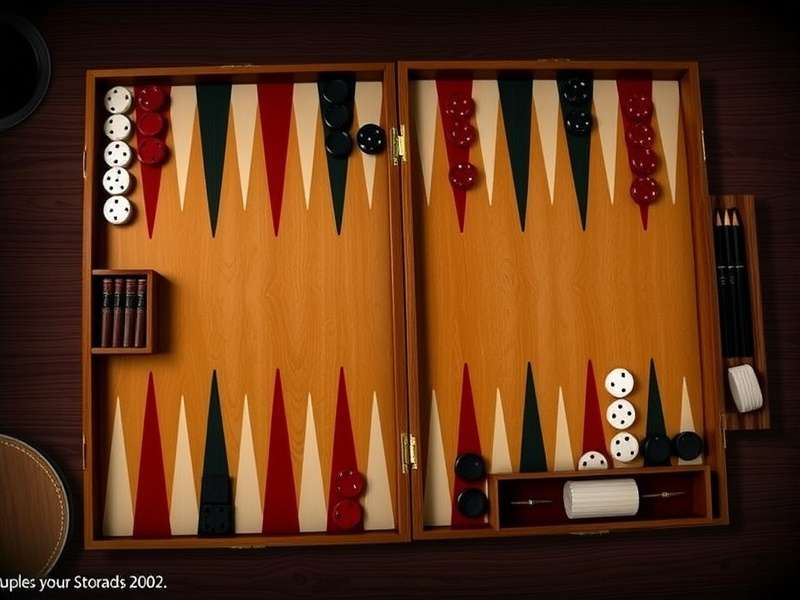
📖 Introduction to Backgammon
Backgammon (also known as Pachisi in some Indian contexts, though distinct from the Indian game Pachisi) is a two-player abstract board game that combines strategic movement with probability calculation. What makes it truly fascinating is the perfect balance between calculated moves and the element of chance provided by dice rolls.
What Makes Backgammon Unique?
Unlike chess, where every move is deterministic, or poker, where hidden information plays a crucial role, Backgammon sits perfectly in between. Each dice roll presents a puzzle: how to best utilise the numbers you've been dealt. It's this constant exercise in adaptability and critical thinking that has made the game a beloved pastime for millennia.
The Cultural Connection to India
While Backgammon's earliest origins are debated — with historical evidence pointing to ancient Mesopotamia, Persia, and even the Indus Valley — what's certain is that dice games have deep roots in Indian culture. The Mahabharata famously features a pivotal dice game, and Indian royalty played variants of board games similar to Backgammon for centuries. Today, the game is experiencing a renaissance across urban India, with backgammon clubs sprouting in metropolitan cities like Mumbai, Delhi, and Bengaluru, and online platforms making it accessible to everyone.
💡 Did You Know? The word "Backgammon" is believed to derive from the Middle English "baec gamen," meaning "back game," referring to the strategy of bringing your pieces back into play after being hit.
🎯 Backgammon Board Setup: A Step-by-Step Guide
Before diving into gameplay, it's essential to understand the playing field. If you're new to the game, the board might look intimidating, but trust me — within five minutes, you'll find it elegantly simple. For a more detailed visual walkthrough, check out our Backgammon Board Setup guide or the companion article on How Do You Set Up A Backgammon Board.
Understanding the Board Layout
The Backgammon board consists of 24 narrow triangles, called points, arranged in four quadrants of six triangles each. Each quadrant is separated by the bar in the middle. Let's break it down:
The Points and Quadrants
- Home Board (your quadrant): The six points in the quadrant closest to you — this is where your checkers must be moved off the board at the end of the game.
- Outer Board: The six points in the quadrant to your right (for the right-side player).
- Opponent's Home Board: The quadrant directly opposite yours.
- Opponent's Outer Board: The quadrant to your left.
The Bar and Home Board
The bar is the central ridge that separates the board into two halves. When a checker is hit by an opponent, it's placed on the bar, and you must "re-enter" it before making any other moves.
Settings Up Your Checkers
Each player has 15 checkers — one player uses white (or ivory), and the other uses black (or brown). Here's the starting setup:
| Position | Number of Checkers | Location |
|---|---|---|
| Your 24-point | 2 checkers | Opponent's home board |
| Your 13-point | 5 checkers | Opponent's outer board |
| Your 8-point | 3 checkers | Your outer board |
| Your 6-point | 5 checkers | Your home board |
The setup is symmetrical: both players have their checkers arranged in the same pattern, but mirrored. If you've ever seen the classic Backgammon Board Game in action, you'll notice how this initial arrangement sets the stage for dynamic opening strategies.
Common Setup Mistakes to Avoid
- Misplacing the 13-point checkers: They belong on the 13-point, not the 12-point. Pay attention to the numbering system.
- Forgetting the 2 checkers on the 24-point: This is the most commonly missed piece of the setup puzzle.
- Orientation confusion: Remember, your home board is on your right side (for the player sitting on the right side of the board). The points run counterclockwise around the board.
Want to create your own board? We've got you covered with How To Make A Backgammon Set — a fun DIY project for crafty enthusiasts!
📜 Backgammon Rules Explained: The Complete Breakdown
Now that the board is set, let's learn how to play! The rules of Backgammon have been refined over thousands of years, and they create a remarkably deep game with a deceptively simple core.
The Objective of the Game
The goal is straightforward: move all 15 of your checkers into your home board, then bear them off (remove them from the board) before your opponent does the same. The first player to bear off all their checkers wins the game.
How to Start the Game
To begin, both players roll a single die. The player with the higher number moves first, using the combination of both dice. If tied, both players roll again. From then on, players alternate turns, rolling both dice and moving their checkers accordingly.
Rolling the Dice and Moving Checkers
On each turn, you roll two dice. The numbers rolled indicate how many points (pips) you must move your checkers. For example, if you roll a 3 and a 5, you move one checker 3 points and another checker 5 points — or you can move a single checker a total of 8 points if it's a legal move.
Legal Moves
- A checker can only move to a point that is empty, occupied by your own checkers, or occupied by exactly one opponent checker (which you "hit" and send to the bar).
- You must use both numbers if possible. If only one number can be played, you must play the higher one.
- You cannot move to a point with two or more opponent checkers.
Hitting and Entering
If you land on a point occupied by exactly one opponent checker, that checker is "hit" and placed on the bar. While you have checkers on the bar, you must first re-enter them into the opponent's home board using the dice roll, before moving any other pieces. If the corresponding point is blocked, you forfeit that portion of your move.
Bearing Off
Once all your checkers are in your home board, you can begin bearing off. A dice roll allows you to remove a checker from the corresponding point. For instance, rolling a 4 allows you to bear off a checker from the 4-point. If the exact point is empty, you can bear off a checker from a lower point — but you must make a legal move if possible. The first player to bear off all checkers wins!
Scoring and Winning
In casual play, the winner simply wins one point. However, in tournament play (and for extra excitement), the doubling cube adds a scoring twist:
- Single Game: 1 point
- Gammon (loser hasn't borne off any checkers): 2 points
- Backgammon (loser still has a checker on the bar or in the winner's home board): 3 points
The doubling cube — a die marked 2, 4, 8, 16, 32, 64 — allows either player to double the stakes of the current game. The opponent may accept (continue playing at doubled stakes) or resign immediately, conceding the current value.
♟️ Backgammon Strategy Guide: From Beginner to Advanced
Understanding rules is just the beginning. Now, let's explore what elevates a Backgammon player from average to excellent. The game is often compared to chess for its strategic depth — but Backgammon adds the fascinating challenge of probabilistic thinking. If you enjoy multiplayer competition, be sure to try Backgammon Multiplayer for a real-time challenge against players worldwide.
Opening Moves: Setting the Stage
The opening roll is critical. Some standard opening responses include:
- Roll of 4-1: Move one checker from the 13-point to the 9-point, and one from the 6-point to the 5-point. This establishes a solid block in your outer board.
- Roll of 6-1: Move one checker from the 13-point to the 7-point, and bring a checker from the 24-point to the 23-point. This creates a building point.
- Roll of 3-3: Move two checkers from the 8-point to the 5-point (creating a strong block) and two from the 6-point to the 3-point.
Mid-Game Tactics: The Art of War
After the opening, the game opens up into a tactical battle. Here are key mid-game principles:
Make Your Points
Points with two or more of your checkers are "made" points and cannot be hit. Prioritise making key points in your home board (the 4, 5, and 6-points) to prepare for bearing off efficiently.
The Golden Point
Owning the 5-point in your opponent's home board is called the "golden point" — it's a powerful anchor that gives you security and a launching pad for attacks.
Hit, Don't Get Hit
Generally, you want to hit loose checkers when it's favourable — but not at the cost of leaving your own checkers exposed in a vulnerable position. Calculate risk carefully.
Endgame Strategies: Closing the Deal
As you enter the bearing-off phase, precision becomes everything:
- Count your pips: Know exactly how many pip counts separate you from victory.
- Flexibility is key: Avoid leaving checkers on adjacent points that create "bottlenecks" — for example, having checkers on the 4 and 5-points but none on 6 can cause wasted rolls.
- Use the doubling cube aggressively: If you have a significant lead, double early to put pressure on your opponent.
Advanced Strategies for the Dedicated Player
For those who crave deeper complexity, explore concepts like the Duplication Strategy (positioning your checkers so that your opponent's most likely rolls hit at most one of your blots) and Backgames (deliberately sacrificing position in your home board to create a defiant defensive setup).
If you're a fan of online play, check out Vip Backgammon Online for exclusive tables and premium features — the perfect testing ground for your new strategies.
🌏 Backgammon Variations: The Game in Different Flavours
One of the beauty points of Backgammon is its adaptability. Different cultures have developed their own twists, keeping the game eternally fresh.
Popular Variations in India
In Indian clubs and online forums, you'll encounter:
- Short Backgammon: Played on a simplified board with 15 points and no bar — a fast-paced alternative that's growing in popularity.
- Jackpot Backgammon: A multi-game format where the goal is to win a series of games to claim a jackpot prize.
- Cube-less Backgammon: Many casual Indian players skip the doubling cube for simpler scoring, allowing newcomers to focus on core strategy.
International Variations Worth Exploring
- Nackgammon: A variant where each player starts with a different checker arrangement, producing more balanced opening moves.
- Hypergammon: A super-fast version with only 3 checkers per player, perfect for tight tactical duels.
- Tabula: An ancient Roman relative of Backgammon with unique movement rules.
And if you're looking for no-cost practice, plenty of Backgammon Games Free platforms let you play unlimited matches against bots — perfect for honing your skills.
💻 Backgammon in the Digital Age: Online Play
Gone are the days when you needed a physical board and a willing opponent sitting across from you. Today's digital world has opened up the game to a global audience, and India is riding this wave enthusiastically.
Playing Backgammon Online
Numerous platforms now host millions of Backgammon players worldwide. The industry leader, Gamecolony Backgammon, offers tournaments, leagues, and a vibrant community. Similarly, Backgammon Online delivers a seamless browser-based experience.
Online play offers significant advantages:
- Global competition: Play with opponents from every time zone.
- Instant matchmaking: Find a game in seconds, 24/7.
- Analysis tools: Many platforms provide move-by-move analysis using AI-engines like XG1 or GNU Backgammon.
- Chance to win prizes: Online tournaments often give cash awards and trophies.
Using Backgammon Apps
Mobile apps have taken the game to the next level. Top-rated apps include:
- Backgammon Live — Real-time multiplayer with a clean interface.
- Backgammon Pro — Offline play against robust AI with adjustable difficulty.
- XVIII Backgammon — A premium premium option with detailed statistics.
🏆 Backgammon Tournaments and Community in India
The competitive Backgammon scene in India is growing at an impressive pace. Although Backgammon tournaments are less mainstream than cricket — a unifying passion of the nation — dedicated communities are making significant strides.
Growing Backgammon Community
It's remarkable to see the enthusiasm. Consider this perspective: India has produced several world-class chess Grandmasters, and the strategic DNA that drives chess success is equally applicable to Backgammon. The country's mathematical aptitude, combined with a robust online gaming culture, creates fertile ground for Backgammon excellence.
Key centres of Backgammon activity:
- Mumbai: Home to regular meetups and small-scale tournaments.
- Bengaluru: A hub for startup culture and strategic board gaming.
- Delhi NCR: Weekly games in elite clubs.
- Goa: A growing community focusing on the gambling aspects of the game.
If you're passionate about taking your play to a competitive level, investing in a quality physical board is worthwhile. Check out Backgammon Board Game to find tournament-grade boards that are a pleasure to play on.
🔥 Backgammon Tips and Tricks: Common Mistakes and How to Fix Them
Every player — from beginner to grandmaster — makes mistakes. The journey to mastery is largely about identifying and eliminating errors. Here are the most common ones I see among Indian players:
Common Mistakes
- Being too passive: Failing to hit opponent blots when the opportunity presents itself. Backgammon rewards aggression.
- Over-focusing on attack: Conversely, leaving your home board weak in pursuit of hits is exactly how you lose to a seasoned counter-attacker.
- Poor pip counting: Always be aware of the pip count. It determines whether you should be playing safe or running for home.
- Ignoring the doubling cube: In games with the cube, many players never double when they should. A well-timed double is often more powerful than a brilliant move.
- Inconsistent bear-off: When bearing off, the goal is to minimise the number of rolls needed. This sometimes means bearing off from the 6-point even when you rolled a 5.
Practice Strategies
Getting better at Backgammon requires deliberate practice:
- Play regularly: Ten short games a week beat five marathon sessions.
- Review your losses: The bitter loss you've just suffered is your greatest teacher. Many platforms let you replay games move by move.
- Study opening theory: The first 2-3 moves of any game set the tone. Learn them cold.
- Join communities: The Backgammon Reddit community and forums like BGonline are treasure troves of shared knowledge.
- Read world-class books: Paul Magriel's "Backgammon" and Bill Robertie's "Backgammon for Winners" are must-reads.
❓ Frequently Asked Questions
Let's clear up some common doubts about Backgammon:
Can two people play Backgammon online?
Absolutely! Platforms like Backgammon Multiplayer allow you to play against friends or strangers in real-time. You can even create private rooms to play with a friend via a link.
Is Backgammon a game of luck or skill?
Over a single game, luck plays a huge role — the dice can be brutally unfair. But over a match of 10 or more games, skill dominates completely. The best players consistently beat good players, which is why Backgammon is respected as a genuine intellectual sport.
What is the best first move in Backgammon?
Most experts consider a roll of 4-3 to be the best opening roll in standard Backgammon. Moving one checker from the 13-point to the 9-point, and one from the 6-point to the 3-point, creates a strong position in both halves of the board.
Can I play Backgammon without the doubling cube?
Absolutely. Many casual games are played without the cube. The cube adds a betting element that changes the strategy significantly, but you can enjoy perfectly valid games without it.
Is Backgammon legal in India?
Backgammon is a game of skill, and skill-based games are legal in India. However, if gambling is involved (playing for money), the legality varies by state. Check local regulations before playing for stakes.
What's the ideal board size for a Backgammon set?
Standard tournament boards are around 45×50 cm when open. For home use, anything similar works well. If you're travelling, look for foldable boards around 30×40 cm.
🔚 Conclusion: Your Backgammon Journey Begins Now
Backgammon is more than just a game — it's a journey of continuous learning, instant replayability, and pure joy. From the first roll of the dice to the perfect backgammon win, every game tells a unique story.
As you embark on your Backgammon adventure, remember: every master was once a beginner. Bang on the board, grab your dice, and play your first game tonight. India's Backgammon community is growing — be part of the revolution!
Happy playing, and may the dice be ever in your favour! 🎲✨
Share Your Backgammon Experience
Have a question about strategy? A memorable victory story? Leave a comment below — we love hearing from our readers!