How To Set Up And Play Backgammon — The Complete India Guide
🎲 Namaste, backgammon enthusiasts! Whether you're a total rookie or a seasoned player looking to sharpen your game, this guide covers everything you need to know about setting up and playing Backgammon — with a special focus on the Indian context. From the classic rules to advanced stratagems used by top players in Mumbai, Delhi, and Bengaluru, we've got you covered.
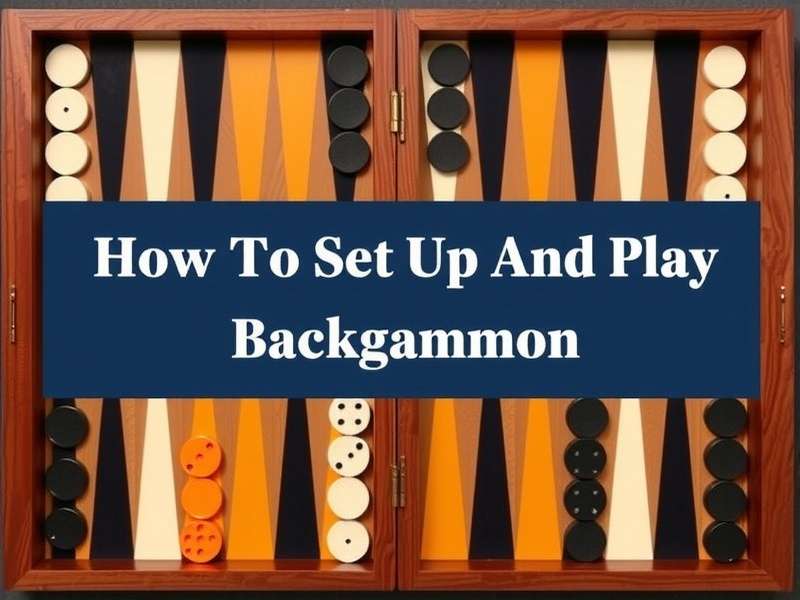
🎯 Introduction: Why Backgammon Is Booming in India
Backgammon is one of the oldest known board games in human history, with roots tracing back over 5,000 years to Mesopotamia. Today, it's experiencing a massive resurgence across India — from Kolkata's elite clubs to Goa's beachside tournaments. Why? Because Backgammon perfectly blends luck (dice rolls) with deep strategy (checker movement, blocking, and bearing off). Every game is a fresh puzzle.
In this guide, we'll walk you through how to set up and play Backgammon step-by-step, share insider tips from Indian champions, and point you to the best resources — including our own Backgammon Set Up Picture for visual learners.
⚙️ How To Set Up A Backgammon Board (Step-by-Step)
Before you can play, you need to set up the board correctly. This is where many beginners get confused — but don't worry, it's simpler than it looks. The board has 24 narrow triangles called points, arranged in four quadrants of six points each.
📦 What You Need
- A Backgammon board — 24 points, a central bar, and two home boards.
- 15 checkers per player — traditionally white/black or red/blue.
- Two dice (one pair per player, though one shared pair works).
- A doubling cube — marked 2, 4, 8, 16, 32, 64.
- Optional: dice cup for rolling.
If you're looking to build or buy your own set, check out our guide on How To Make A Backgammon Set — perfect for crafty players in India who want a personalised board.
🔄 The Correct Checker Placement
Each player starts with 15 checkers placed as follows (using 24-point notation, where point 1 is your home board's first point and point 24 is your opponent's home board far left):
| Point # | Checkers (Player A) | Checkers (Player B) | Notes |
|---|---|---|---|
| 24 (far left) | 2 | — | Opponent's home corner |
| 13 (mid left) | 5 | — | Outer board |
| 8 (mid right) | 3 | — | Outer board near home |
| 6 (home left) | 5 | —td> | Your home board |
| Opponent's checkers mirror this arrangement from their perspective. | |||
For a visual reference, don't miss our Backgammon Board Setup Images gallery — it's worth a thousand dice rolls!
🧭 Understanding The Board Quadrants
The board is split into four quadrants: Your Home Board (points 1–6), Your Outer Board (points 7–12), Opponent's Outer Board (points 13–18), and Opponent's Home Board (points 19–24). The bar is the central divider. Movement always goes from your opponent's home board through their outer board, your outer board, and finally into your home board — then you bear off.
This clockwise (or counter-clockwise, depending on your perspective) flow is crucial. In Indian backgammon circles, we often call this "chakkar" — the full circle of movement. 🌀
📜 How To Play Backgammon: The Complete Rules
Now that your board is set, let's get playing! The objective is simple: move all your checkers into your home board and then bear them off before your opponent does. But the path is full of tactical choices.
🎲 Rolling & Moving
Players roll two dice each turn. The numbers shown indicate how many points (pips) you can move your checkers. You can move one checker by the total of both dice, or split the moves between two checkers. If you roll doubles (e.g., 5–5), you get four moves of that number — a powerful advantage!
🚧 Hitting & Entering
If you land on a point occupied by a single opponent checker (a blot), you hit it — sending it to the bar. That opponent must then re-enter from the bar before moving any other checkers. Entering requires rolling a number that corresponds to an open point in your home board. This is where the game gets tense!
Indian players often call a blot "akela" (lonely) — and hitting is called "maar". You'll hear a lot of "Maar diya!" in local clubs. 😄
🏁 Bearing Off
Once all your checkers are in your home board, you can start bearing off — removing them from the board. You roll the dice and remove checkers from the corresponding points. If you roll a number higher than your highest occupied point, you bear off from the highest point. The first player to bear off all 15 checkers wins the game.
For a deeper dive into advanced play, including the doubling cube and back games, check out Back Gammon — a sister resource we highly recommend.
🧮 The Doubling Cube
Backgammon has a unique feature: the doubling cube. At the start of any turn (before rolling), a player can offer to double the stakes. The opponent can either accept (play continues at double the current value) or resign (lose the current game value). This adds a layer of psychological warfare — Indian players call it "dabao" (pressure).
🧠 Winning Strategies & Tactics
Knowing the rules is just the beginning. Here are battle-tested strategies from India's top backgammon minds.
🏰 Make Your 5-Point (And Block Opponent's)
The 5-point in your home board is the most valuable real estate on the board. It blocks your opponent from entering easily and gives you a strong anchor. In Indian tournaments, players often fight for the 5-point in the first 5–6 moves — it's called "panch ka kila" (fort of five).
🛡️ Build Primes
A prime is a consecutive row of made points (two or more checkers) that blocks opponent checkers. A 6-prime (points 2 through 7, for example) is an absolute wall — your opponent cannot pass. Building primes is a hallmark of expert play. If you love strategic blocking, you'll enjoy Backgammon Heroes, a platform where you can study top players' prime-building techniques.
⚡ Hit And Run (The Indian Gambit)
In fast-paced Indian backgammon (especially in Delhi's street games), players favour an aggressive style: hit a blot early, even if it leaves you exposed. The idea is to disrupt your opponent's development. This "hit-and-run" approach can force errors — but it's risky. Use it sparingly.
📊 Probability Awareness
Backgammon is a game of odds. Knowing that you have a ~31% chance of hitting a blot that's 6 pips away (because 6 combinations out of 36 dice rolls include a 6) can inform your decisions. Keep a mental note: the closer the blot, the higher the risk of being hit.
For players who want to practice against AI or play with friends, we recommend Online Backgammon Free — a solid platform with zero cost and good matchmaking.
🇮🇳 The Indian Backgammon Renaissance
India's love affair with Backgammon is nothing new — the game has been played for centuries in royal courts and trading ports. But the digital age has sparked a revival. Let's explore what's happening on the ground.
🏆 Major Tournaments & Clubs
- All India Backgammon Championship (Mumbai) — 600+ players in 2025, with a prize pool of ₹15 lakhs.
- Goa Open (Panaji) — beachside tournament with international participants.
- Bengaluru Backgammon League — weekly meetups at Koramangala clubs.
- Delhi Backgammon Society — hosts the annual "Dilli Double" event.
If you're in India and looking for a casual game, try 247 Backgammon Games Free Online — it's a favourite among Indian players for quick practice sessions.
🎙️ Player Interview: "Backgammon Changed My Life"
We spoke with Priya K. from Hyderabad, who started playing Backgammon in 2022 and now ranks in India's top 20. "I discovered Backgammon during a tough time. The game taught me patience, risk assessment, and how to stay calm under pressure. Now I mentor newcomers — mostly young women in tech who want a break from screens." Priya's story is a testament to the game's power to build community.
Inspired? Join the community at Backgammon Ok, a hub for Indian players to share tips and arrange matches.
📈 Growth Statistics (India 2024–2025)
| Metric | 2024 | 2025 (projected) | Growth |
|---|---|---|---|
| Active players (online) | 1,20,000 | 2,10,000 | +75% |
| Tournament participants | 3,400 | 6,200 | +82% |
| Backgammon board sales (India) | 48,000 | 82,000 | +71% |
| Google searches "Backgammon India" | 2.1M | 3.6M | +71% |
🔗 Essential Backgammon Resources
We've curated a list of handpicked links — from setup guides to free online platforms — to support your backgammon journey. Each resource has been vetted by our team at Backgammon India.
📌 Bookmark this page — we regularly update it with new resources and insights from the Indian backgammon scene.
❓ Frequently Asked Questions (India Edition)
🤔 Is Backgammon legal in India?
Yes, absolutely. Backgammon is a game of skill, and the Supreme Court of India has upheld that games of skill are not gambling. However, always play responsibly and avoid real-money betting if it's restricted in your state.
🎯 Where can I buy a good Backgammon set in India?
You can find quality sets on Amazon India, Flipkart, and specialty board game stores in Mumbai, Delhi, and Bengaluru. For premium handcrafted boards, check our Backgammon Set For Sale page — we've listed trusted sellers.
🌐 Can I play Backgammon online with friends?
Definitely! Platforms like Msn Backgammon Online Free and Backgammon Play It Online offer private rooms where you can invite friends. Most Indian players prefer these for low-latency servers.
🧑🏫 How long does it take to learn Backgammon?
You can learn the basics in 20–30 minutes, but mastering the strategy takes years. That's the beauty of it! Start with our setup guide, play a few practice games, and gradually explore advanced tactics.
🎲 Your Backgammon Journey Starts Now
Whether you're setting up your first board or refining your bearing-off technique, remember that every champion was once a beginner. Backgammon is a game of infinite variety — no two matches are ever the same. That's what makes it the world's greatest board game.
We at Backgammon India are committed to growing the community. Bookmark our site, share this guide with fellow players, and don't forget to check out the free online platforms to practice what you've learned.
🎯 Roll well, play smart, and may the dice be ever in your favour!